Language claims
The Etruscan version: why it is closed by the calendar rather than by statistics
The version is an appealing one: an unread language of ancient Italy and an unread book. But fourteen centuries lie between the death of Etruscan and the making of the parchment, and a corpus for an honest test does not physically exist.
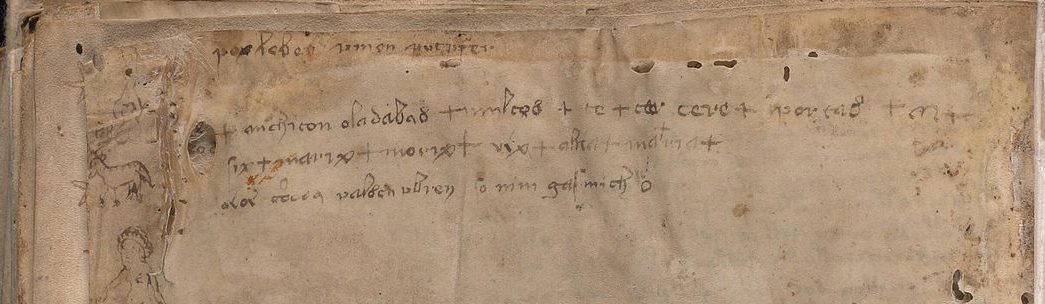
The version is attractive for its symmetry: there is an unread book, and there is a language of ancient Italy that has never been fully read. The temptation is to bring the two together. Let us take it apart piece by piece - beginning with a story that attached itself to the Etruscans recently and artificially.
The Lampedusa myth
Retellings of the last few years contain a chain that runs "the Voynich - Genoese merchant ciphers - the island of Lampedusa". We checked that block of claims against primary sources: not one of them has a source. It belongs to the set of inventions found in machine-written reviews, along with a non-existent "DAI method" and incorrect entropy figures.
The geography does not work either. Etruria means Tuscany, Umbria and northern Lazio, plus colonies in the Po valley and in Campania. Lampedusa is a tiny island nearer the coast of Tunisia than Sicily, with a Punic and Greek record.
A cautious guess about where the confusion comes from: this is probably a garbled Lemnos. On that island in the Aegean a stele of the sixth century BC was found, written in Lemnian, the closest relative of Etruscan. A link between an island and the Etruscans does exist in scholarship, but it is a Greek one, and it is two thousand years older than our manuscript.
The main obstacle is the calendar, not the statistics
Here our apparatus is not even needed.
- The parchment of the manuscript is radiocarbon dated to 1404-1438.
- The Etruscan language died out by roughly the first century AD. Already under the early empire
it was an object of antiquarian curiosity rather than a means of communication.
Between those dates lie about fourteen centuries. The version is obliged to explain who, at the start of the fifteenth century, commanded a dead language fluently enough to write two hundred pages of connected text in it - and why.
An appeal to Renaissance fashion does not rescue it: interest in the Etruscans flared up later than the manuscript, and it produced a forgery. In 1498 Annio da Viterbo published "ancient Etruscan" works of his own making that have nothing to do with the real language. That is sixty years later than our parchment.
Why we cannot test this with our own method
Normally we answer language versions with a measurement: we pass a text in the language through the cipher model and compare fingerprints. With Etruscan that will not work, for two independent reasons.
The first. Our structural filter for languages has gone blind. On 27 July we found that its key measure was ranking corpus sizes rather than languages, and we retracted our earlier conclusions - the detailed account is here. At present it neither rejects nor confirms any language.
The second, and more fundamental. Even with a working filter there would be nothing to run. The whole of surviving Etruscan amounts to something like thirteen thousand inscriptions, but the overwhelming majority consist of two to five words on a funerary urn: name, patronymic, age. The longest connected text, the linen book from Zagreb known as the Liber Linteus, runs to about a thousand words of ritual calendar. For an honest run we need on the order of 57 thousand letters of connected text.
This is the case we always keep separate from rejection: not "we tested and found nothing", but there is nothing to test with. Popular retellings blur the difference between those two states, and the difference is fundamental.
What it would take for the version to come back to life
Let us state honestly the conditions under which we would return to Etruscan:
1. The appearance of a sufficiently long Etruscan text - at least a few tens of thousands of characters of connected language. Two hundred years of excavation have not produced such a find. 2. External evidence that somebody in the fifteenth century knew the language and could use it. There is no such evidence: the first attempts to analyse Etruscan belong to the eighteenth century. 3. An explanation of why the manuscript nonetheless carries European marks of its own time: cursive letter shapes, the forms of the numerals in the quire numbering, Occitan month names in the margins of the zodiac pages.
None of the three conditions is met.
What this shares with the other language versions
The Etruscan version is a particular case of a general trap. The syllables of any language combine in a limited number of ways, and the manuscript holds about 37 thousand words. At that volume any language will yield dozens of "recognitions". That is how the Persian, Hebrew, Sanskrit and Aztec readings were born.
One rule saves the situation: structure first, meaning afterwards. A version is obliged to predict something measurable, and the prediction has to be checked before any translation. The Etruscan version stops at that step not because we are strict, but because of the missing data and because of the calendar.
No decipherment of the Voynich manuscript exists. A coincidence is not a reading.
FAQ
Could the Voynich manuscript have been written in Etruscan?
Practically speaking, no. Etruscan died out by roughly the first century AD, while the parchment of the manuscript is dated to 1404-1438 - a gap of about fourteen centuries. The version needs a fifteenth-century person fluent enough in a dead language to write two hundred pages in it.
Were there Etruscans on Lampedusa?
No. Etruria means Tuscany, Umbria and northern Lazio, plus colonies in the Po valley and in Campania. Lampedusa lies closer to Tunisia than to Sicily, and there is no Etruscan trace there. The claim of a link between the Voynich and Lampedusa turns up only in retellings produced by neural networks.
Why not simply run Etruscan through your structural filter?
For two reasons. After a check on 27 July 2026 the filter was found to be blind to language. And even if it were working, there is not enough data: the whole surviving Etruscan corpus consists mainly of short funerary inscriptions, the longest text runs to about a thousand words, and a run needs something like 57 thousand letters of connected text.
Could the Renaissance interest in the Etruscans have produced such a book?
That interest began later than the manuscript, and it turned out to be a forgery: in 1498 Annio da Viterbo composed pseudo-Etruscan texts that have nothing to do with the real language. By the dating that is already after our parchment.