Near misses
Near misses: twenty times the answer seemed one step away
A calendar that passed three checks. A book of 1494 with a margin of a fraction of a percent. A signal on the zodiac, replicated blind. Each of these cases we carried through to the end by rules written in advance - and each one closed. Here they are gathered together, with the numbers and with what was missing.
In October 2026 we introduced a rule: to every conclusion, add a "near miss" remark - what small shift would have made the result several times better, and what test would check it honestly. It turned out that such remarks had accumulated over the whole project; they had just lived in the journal. Here are the twenty main ones, from the best known to the most recent.
How to read the table: "how close" is the threshold set in advance and what came out; "what killed it" is the check that closed the case; "what would have brought success" is the shift we named and the status of its test.
Five that almost became papers
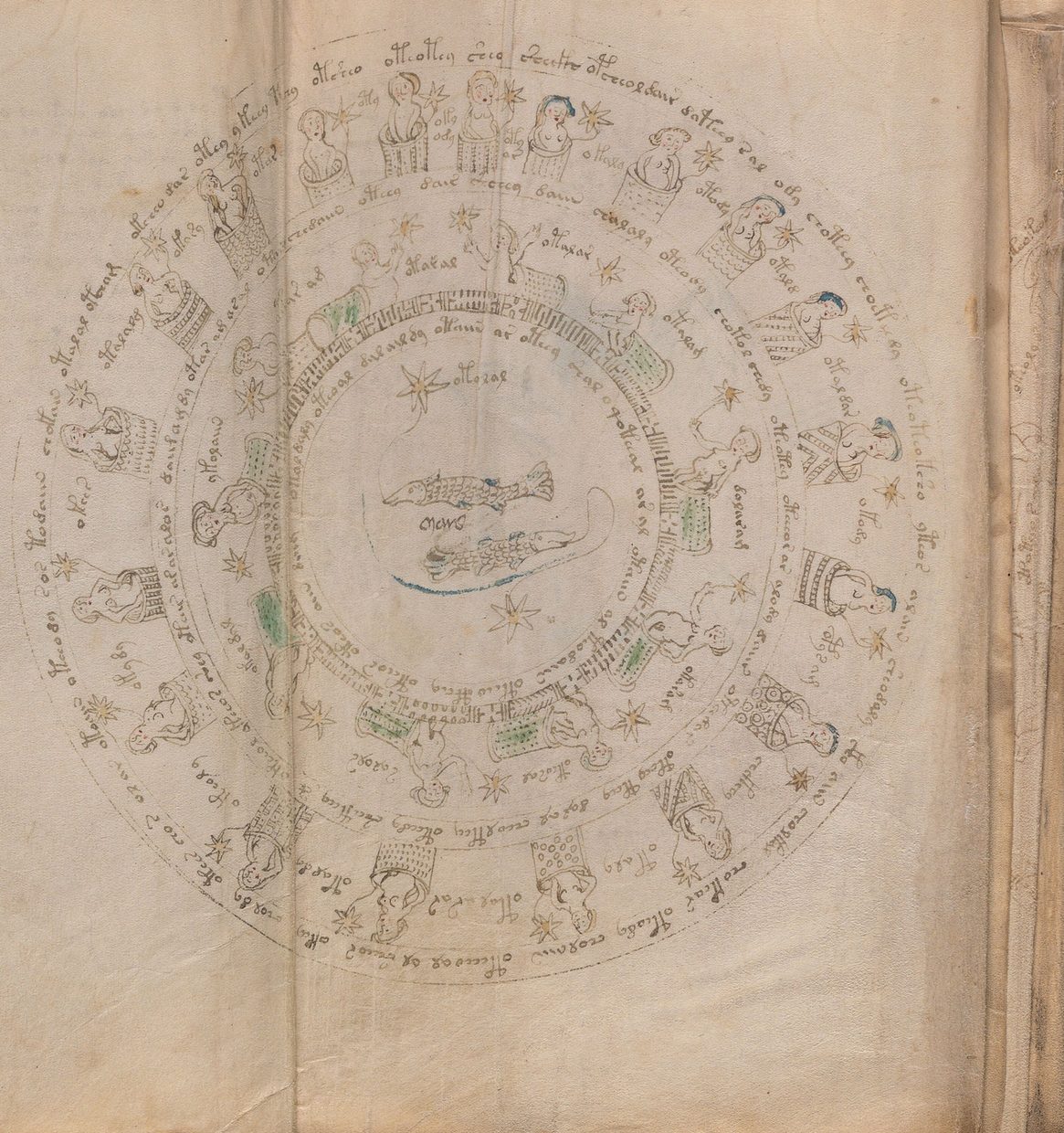
The Lleida calendar, 1524. If the zodiac labels are days of the year, then saints may stand around the rings. We ran nineteen church calendars, twelve from southern France and seven Iberian, with preregistration of the family and a correction for multiplicity. Lleida came first: p 0.0020 at a threshold of 0.0022. Replication on an independent transliteration - p 0.0040, passed. The held-out sample - passed. Three barriers out of three. What killed it was decomposition by anachronism: the signal was carried by saints canonised after 1438 - that is, after the radiocarbon date of the parchment. The structure of the calendar matched, not the content. No complete fifteenth-century sanctoral of Lleida physically exists. The full analysis is in a separate article.
The lapidary of Alfonso X. The first preregistered signal of the programme of searching external lists: p 0.008 at a discovery threshold of 0.005, and the peak of the shift exactly at 23 - the same place as the zodiac signal. What killed it was our own parser: the alignment of the source drifted. The corrected version, checked against the edition of 1881 (names 86.5 % against 62.5 %), gave p 0.077, and the peak vanished. The order by the centre pointers - zero as well. The lesson went into the rules: verify the alignment of a source against an independent witness before the test.
Ketham's book, 1494. The single hit out of 1 104 pairs in the search for a source text by the order of entry lengths: a distance of 0.2119 at a null minimum of 0.2147, margin 0.14 %. What killed it was the confirmatory procedure with a different null: the block order of the section does not differ from a permutation (0.015 at a null of 0.033, whereas on synthetic text with a real correspondence it is 0.080), and the Latin edition of the same compendium cleared the threshold on no target at all. The whole story is in Door number two.
The shift of 23. The attribute of a nymph matches al-Biruni's table of male and female degrees at a shift of 23 positions. Blind replication - p 0.0088 with the peak exactly at 23; specificity against two other markings of the same degrees - zeros. This is a real signal. What killed it was generalisation: on six signs from Cancer to Sagittarius - a complete zero; the signal is local to Pisces, Aries and Taurus and indistinguishable from a division into "light and dark halves". Success would have come from a third coder and an external list of degree names - but the Astrolabium list of 1488 did not fit positionally. More in Zodiac by degrees.
The Milan cipher of 1424. The first specimen of syllabic writing inside the radiocarbon window: a syllabary of 150 syllables with code groups and chains of Roman numerals, reconstructed by Mark Knowles from intercepts of the Florentine chancery. This corrected our picture of the period: we had assumed that syllabic signs appear in ciphers from the 1450s. What killed it was the profile: on Latin this key gives an entropy of 3.86 and 3.55 against the manuscript's window of about 2.2. The conclusion does not depend on the variant of the key's transcription. More in The Milan cipher of 1424.
Fifteen more
| what almost worked | how close | what killed it |
|---|---|---|
| The Dream Book of Daniel as the source of Q20: 292 entries against 292 paragraphs | the match of count is exact | the order does not match (+0.011 at a power of +0.62) |
| Ge'ez in the empty corner of languages | 2.671 bits at a boundary of 2.60 - 0.07 short | an artefact of the corpus: the word divider became a syllable in 92 % of words; on a clean corpus +0.16…+0.30, in fidel +1.3 |
| The Caspari-Faccini key (Max Planck, 2025) | beats 200 random permutations, p 0.005 | the pseudo-lexicon reads almost like Italian, Latin at equal volume reads better (0.903 against 0.658), 62 % of the tokens cannot be read |
| Zandbergen's anchor: the roots of the pharmaceutical panel f102r2 found in the herbal blind | chance 6.25 %; the 2025 list reproduced 22/28 | Knowles's list does not reproduce (3/21); at the level of a fragment's label there is no link at a power of 1.00 |
The month names: octembre north, abril south | the best scripta gives 5 soft matches out of 10 | four disputed forms - zero in all 25 scriptae; no specificity |
| The lunations of the computus against the 12 moons of f67r2 | 10 matches out of 12 | p 0.0855 at a threshold of 0.01; the referent itself is degenerate - one string for all 19 golden numbers |
| Doubled syllables as a fingerprint of the genre of remedy books | three traditions - Armenian, Ottoman, Coptic | in the manuscript this is a joined repeat of neighbouring words, a defect of the model, not a genre |
| The cycle of line openers d → q → y in the canon with a permuted table | z +3.63 - one candidate out of ten | the mean over ten permutations is -0.5: the luck of one permutation |
| A repeat with a one-sign correction | passed all axes but one: 0.0307 at a threshold of 0.032 | a parameter cannot be fitted to the threshold after the count; the correction breaks the junction of neighbours |
| A change of endings at the paragraph boundary | z 1.79 at a threshold of 2 | with three-line windows and a power of 10/10 - z 0.58, no changes |
| Drift of leaf groups by seriation | place 56 out of 181 440 | the alignment rests on the composition of the sections; parity not passed |
| The axis "class of a word - class of the next" | the canon carries the size | the composition differs: half of the link in the manuscript is the splits s aiin, of which the canon has none |
| The order of bifolios by LSA | our best order for Q13 matched someone else's | not significant against the null (p 0.81); a null without power |
| Bourdeau's battery of 37 axes | the canon beats all candidates, 22 matches against 16 | does not hold four vocabulary axes - the same family of defects |
| A tolerant solver on synthetic text with scribal errors | power is there with dummy signs (0.561), with an error in a table - 2 seeds out of 3 | the manuscript under 11 languages - against; the solver is blind to homophones in any model |
Three lessons
First. Three formal barriers in a row are not a proof. At Lleida the structure matched, not the content, and this came out only through decomposition by anachronism. Now any match of a quantity is accompanied by a check of composition: what exactly carries the signal.
Second. A margin of a fraction of a percent is a reason for a confirmatory procedure with a new null, written before looking any further. Ketham closed the same evening precisely because the procedure was ready in advance.
Third. A real signal and uselessness for reading are compatible. The shift of 23 is real and local. Zandbergen's anchor is real and alone. The doubled syllables are real and explained by the mechanism. Rule No. 1 of the project - a match is not a reading - was born of these cases.
The register goes on: every new conclusion gets a line with a number, a shift and a way to test it. A closed miss does not reopen without a new argument. The full list with test numbers is in the replication materials on the page Data and code.
FAQ
What do you call a near miss?
A result that passed some of the thresholds set in advance, or fell short of a threshold by a small amount - and then closed under honest testing. These are neither defeats nor victories; they are a map of the boundaries - where the method is sensitive, where it lies, and what is missing.
Why did you not push these cases to a result by fitting?
Because a rule of the project forbids repeating "until the desired result". Every shift is named before the data, tested once with a new preregistered test, and the outcome is recorded. Otherwise any of the twenty misses could have been turned into a sensation.
Which miss was the closest?
By formal barriers - the Lleida calendar, with Bonferroni, replication on an independent transliteration and a held-out sample. By numerical margin - Ketham's book of 1494, with 0.14 percent to the chance threshold. Both are closed.
Are there real signals among the misses?
Yes. The shift of 23 on the zodiac is replicated blind and is specific - but local to three signs. Zandbergen's anchor between the pharmaceutical panel and the herbal was reproduced blind - but the list of pairs on which the test was built turned out to be unfit. A real signal and uselessness for reading do not exclude each other.